Improve your well-being with incense
(Global Heart) Have you ever walked into a room, caught a whiff of a specific scent, and immediately felt your mood shift? Whether it’s the nostalgic smell of rain on hot asphalt or the soothing aroma of fresh lavender, scent has a direct line to our emotions. For thousands of years, civilizations across the globe have harnessed this power through incense. From the ancient temples of Egypt to the focused preparation of Japanese Samurai, burning incense has been a cornerstone of human ritual and relaxation.
How incense can improve your well-being
But you don’t need to be a warrior or a monk to enjoy the benefits. In our fast-paced modern world, incense is a simple yet effective tool to help you slow down, breathe, and find your focus.
The history of incense
The history of incense is as rich and layered as the scents themselves. The word actually comes from the Latin term for ‘to burn’, and its roots go back surprisingly far. While the earliest records lead us to China around 2000 BC, archaeologists have found incense burners in Egypt dating back much earlier.
It wasn’t just about religious offerings, though. In 15th-century Japan, the “high art” of appreciating incense—known as Kōdō—became a sophisticated practice for the upper classes. Even the Samurai used it! They would perfume their helmets before heading into battle, believing it created an aura of invincibility. While we might not be able to scientifically prove that a scent makes you invincible, we certainly can’t deny the psychological boost of feeling grounded and prepared.
The science of sniffing
You might wonder if the benefits are all in your head. Well, they are—literally! Scientists have discovered that certain resins, like frankincense, contain a compound called incensole acetate. This clever little molecule has been found to have anti-inflammatory properties and can significantly lift your mood.
When you light a stick of incense, the aromatic molecules travel to your brain’s limbic system, which manages emotions and memories. This is why a scent like lavender can physically slow down your sympathetic nervous system (your “stress centre”), signaling to your body that it’s time to relax.
Choosing the right fragrance for your mood
Different scents serve different purposes. Depending on what your day looks like, you can use incense to either wind down or gear up. Here are some of the most popular fragrances and what they can do for you:
- Amber: With its warm and soothing effect, amber acts as an excellent stress alleviator for a busy mind.
- Benzoin: With its warm, balsamic, and sweet notes, benzoin offers comfort. It is especially suitable for emotional healing or creating a safe, cozy atmosphere.
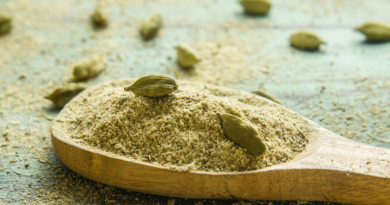
- Cardamom: Lightly spicy and invigorating, cardamom stimulates mental clarity and focus. It’s a great choice for the morning or whenever you need a fresh start.
- Cedar or Pine: These woody, stimulating fragrances are well known for their ability to provide comfort and support when you are dealing with feelings of sadness or depression.
- Chamomile: Just like the tea, the scent of chamomile is a gentle way to help you prepare for a better and deeper sleep.
- Cinnamon: If you find your mind wandering, cinnamon is known to help sharpen your focus and increase concentration.
- Eucalyptus: This powerful, minty aroma is perfect for sharpening your senses. It makes you more alert and leaves you feeling determined and ready to tackle your projects.
- Frankincense: A sacred resin that cleanses your energetic field. It is widely used during meditation and rituals for spiritual deepening and opening the “third eye.”
- Gardenia: Known for its rich and floral aroma, gardenia is a wonderful scent for promoting peace and harmony. It helps to ease the mind and brings a sense of elegance to your space.
- Jasmine: A lovely, calming fragrance that helps clear your mind of stressful thoughts and gives your mood a natural boost.

- Lavender: This is perhaps the most famous calming scent. It is scientifically proven to slow down your sympathetic nervous system (your stress centre), helping your body and brain enter a state of deep relaxation.
- Lotus: Often associated with purity, lotus helps you deepen your attention and heightens your senses.
- Opium: A rich, exotic and spicy scent that is often used to create a mysterious and deeply relaxing atmosphere. It is perfect for winding down and letting go of the day’s worries.
- Palo Santo: This ‘holy wood’ has a warm, sweet scent. It is perfect for chasing away negativity and bringing harmony to your home, helping to open the heart.
- Patchouli: Earthy and sensual, patchouli boosts self-love and creativity. It is often used to empower the sacral chakra.
- Rosemary: This fragrant herb is a great choice if you are looking to reduce stress and lower anxiety levels.
- Sandalwood: A classic and calming fragrance that helps remove physical tension. It is often used in spiritual practices as it symbolises the stimulation of consciousness.
- Vetiver: A wonderful earthy scent that is specifically known for improving the quality of your night’s rest.
- White Sage: Known as a powerful purifier, it is ideal for cleansing spaces, people, or even crystals. It strengthens your intuition and has a deeply calming effect.
- Ylang-ylang: This exotic floral scent is perfect for those moments when you need an extra spark of creativity..
How to use incense in your routine
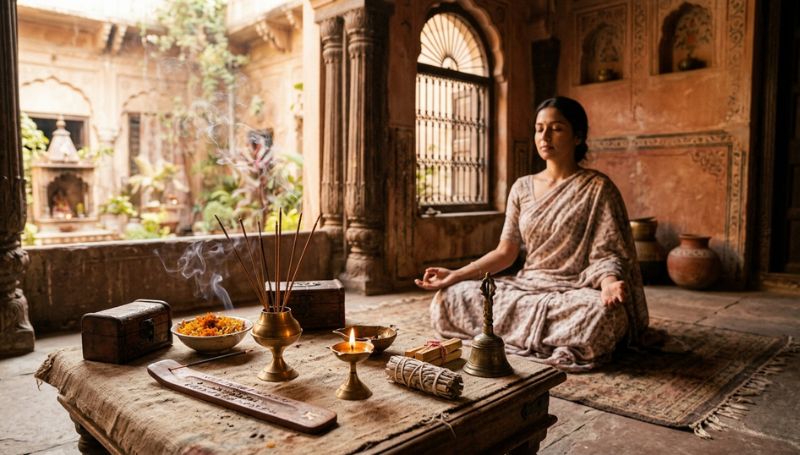
If you want to enhance your meditation or yoga practice, try lighting incense a few minutes before you start. This allows the aroma to fill the room, creating a “scent memory” that tells your brain it’s time to be still. If you find the smoke a bit too intense, you can simply burn it in a corner of the room rather than right in front of your face.
Whether you’re looking to purify your home, boost your motivation, or simply enjoy a moment of peace after a long day, this ancient tradition offers a beautiful, sensory way to care for your mental well-being. Why not light a stick of sandalwood tonight and see where the scent takes you?
How do you usually create a relaxing atmosphere at home after a busy day?
Source: Global Heart
You may also like: