The Wishing Well: An interview with new age legends ‘2002’ on hope, love, and music
(Global Heart) Turning wishes into sound: An exclusive interview with New Age Legends ‘2002’ on the quiet power of intention. A deep dive into their 23rd album, ‘The Wishing Well,’ and the memories that shaped it.
Music that feeds the soul
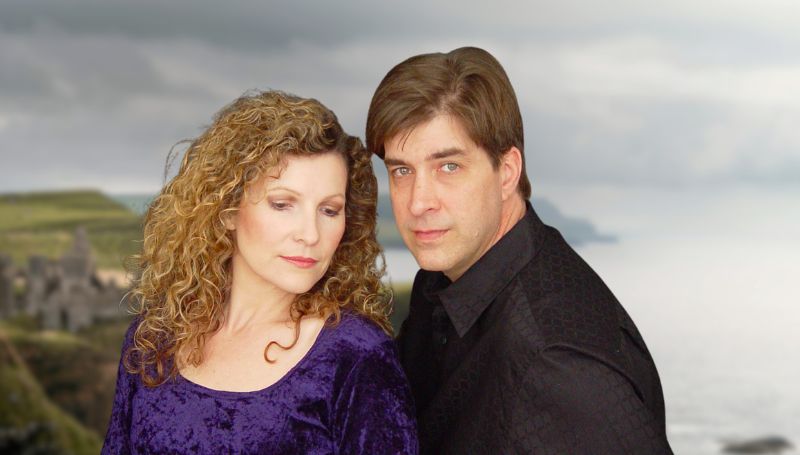
For over 34 years, the award-winning ensemble 2002 has been a cornerstone of the New Age genre, placing 12 albums on the Billboard Charts alongside icons like Enya and Yanni. With over 1.5 billion streams and a Lifetime Achievement Award to their name, Randy, Pamela, and their daughter Sarah Copus have mastered the art of the soulful sanctuary.
Their 23rd studio album, The Wishing Well, is a meditation on the quiet power of intention. The band describes this work as a collection where each song acts like a coin cast into still water—a musical wish sent outward in faith. From the ‘Bellehaven’ garage where the miracles first began to the starlit canyons of New Mexico, this album is a cinematic journey of love, hope, and renewal. Today, we sit down with 2002 to explore the stories, myths, and memories behind these wishes. Welcome, 2002.
An Interview with 2002 about their new album, ‘The Wishing Well,’ by Esther Haasnoot
Esther Haasnoot: Your name originally featured an infinity sign between two ‘twos’ to represent the two of you on either side of infinity. As you release your 23rd album, how has that sense of ‘infinite’ musical exploration evolved now that Sarah has become such an integral part of the trio’s creative DNA?
Pamela, Randy, and Sarah: Sarah has certainly added a new dimension to our sound. She was singing before she was talking. As a toddler, she could start singing any song out of the blue in the exact right key. She radiated joy and brightness. Her first contribution to the 2002 sound was when she was only 5 years old. She sang the high harmonies on the song ‘Yeshua’ on the album “Believe”. She continued to sing not only harmonies, (often composed by her) but also lead vocals on a number of albums and in several languages.
Esther Haasnoot: You’ve mentioned that ‘Bellehaven’—the track paying tribute to the garage where it all began—feels like a ‘warm blanket’ to you. Randy and Pamela, when you were recording in that small space all those years ago, did you ever imagine your music would become such a sanctuary for millions? And looking back now, what is the one piece of advice you’d give your younger selves?
Pamela, Randy, and Sarah: At the time, we truly had no idea of the scope of what we had begun. We released our first album as 2002 in November, 1992. It was called Wings. Shortly after it came out, we received a call from a Reverend in Galveston. He said that he needed a copy right away and that it was a Christmas gift to him from his son. When I asked if his son knew that he was picking out his own gift, he told me that his son had just perished in a military plane mishap, but when he heard our music on the radio, he knew it was his son letting him know that everything was ok. He made the long drive up to Dallas to meet us and to bring us a photo of his son. Then he got copies of the album for all of the other parents who had lost their child in that crash. Then we realized that we’d started something really important. It was our heart-felt desire to bring light and goodness to the world, wherever and however we could. Looking back now, from so many years in the future, we can’t think of anything that we’d change. The sequence of events of those early years led us to the path we were meant to follow.

Esther Haasnoot: The track ‘Twilight’ is filled with the warm glow of childhood memory, evoking barefoot evenings in the countryside and the tender wonder of filling jars with lightning bugs before setting them free. How do you go about translating such a visual, tactile memory—those ‘blinking fairy lights in the tall grass’—into the cascading melodies and signature vocal percussion that 2002 is known for?
Pamela, Randy, and Sarah: Pamela: The song actually began at the large Celtic harp. I was sitting there one day, remembering an interesting chord progression that Randy had played on keyboards the day before, and soon, melodies began to bloom out of it. A harp naturally loves cascading melodies and patterns. Then the cherished memories from childhood flooded my mind, and the song was born. I was blessed with 28 very sweet cousins, so there were usually many of them to play with. Those were such innocent, carefree days.

Esther Haasnoot: Your albums feature vocals in everything from Sanskrit to Japanese. How do you decide which language ‘fits’ a particular melody? Is it based on the phonetic beauty, or the specific spiritual history of that tradition?
Pamela, Randy, and Sarah: It truly depends on the song. You’re so right that the way the language sounds is a big influence on how it will meld with a particular song. All languages have their own phonetic beauty, to be sure. Randy spent many years singing in choirs and has a gift for Latin and Latin-based languages. Pamela studied many languages over the years, and even got her degree in Spanish. Sarah began studying languages at a very young age. Starting at about 10 years old, she was part of over a hundred performances, singing in Gaelic, Italian, Welsh, Korean, and German. Sarah was the lead vocalist on the albums Celtic Fairy Lullaby and Celtic Fairy Dreams, singing in Gaelic, English, and Welsh.
Esther Haasnoot: The act of making a wish requires both hope and a bit of vulnerability. After 34 years in the industry, does it feel more or less vulnerable to release a new album like The Wishing Well into the world?
Pamela, Randy, and Sarah: Definitely vulnerable. You really expose your soul when you create a new album. And there will always be some who don’t understand or perhaps even disapprove. Release day for a new album is so much like the first day of dropping your small child off at kindergarten, your heart filled with hope that the world would accept this child that you’ve nurtured for so many years and then released like a butterfly in the wind. It’s always with hope and vulnerability!
Esther Haasnoot: ‘ Dream Chasers’ is already becoming a staple in wellness and meditation playlists. Do you consciously compose with the intention of healing, or is the “calm” simply a natural byproduct of your creative process?
Pamela, Randy, and Sarah: Probably a little of both. Music like this is inherently healing when created with honest and sincere intent. And to be honest, calm naturally happens to all three of us when we play our instruments or sing. So, it makes sense that it would manifest in the music.

Esther Haasnoot: One of the most expansive compositions is ‘The Spiral of Heaven,’ recalling an 800-mile pilgrimage to Chaco Canyon. Why was it important for you to revisit that specific ‘vibration’ of the rocky cliffs and the Milky Way for this new collection?
Pamela, Randy, and Sarah: Pamela: I think in a lot of ways, Chaco Canyon 35 years ago was the beginning of what would become the band “2002” the following year. I’m sure the place is quite different now. In those more innocent years so long ago, we were given special permission and a Ranger to escort us to Casa Rinconada, a sacred Kiva constructed by the Anasazi, “the ancient ones” in the Navajo language. We pitched a tent the night before and stayed up all night in amazement of the brilliant spiral of our galaxy – something you cannot see when living near the bright lights of a big city like Dallas. We became acutely aware of the utter silence – freedom from thousands of AC units, cars, and machines that hum and buzz 24/7 and you never realize what true silence is. It seemed as though the rocky cliffs were humming a low vibration. There were sounds from night creatures, including an occasional coyote. We could almost hear our two hearts beating. It was magical and wonderous and flooded our spirits with joy and harmony. The next morning, we entered the sacred kiva at dawn. As a glorious sunrise burst across the canyon, we recorded my flute for over an hour.
Esther Haasnoot: We often hear that your music is a ‘Safe Harbor’ for others. Where do the three of you go—musically or physically—when you need a safe harbor from the world?
Pamela, Randy, and Sarah: Our home is our safe place. We’ve been here for 25 years, and it is truly a beautiful haven for the 3 of us and our two kitties. We each have private sanctuaries of musical instruments for musical meditation and for incubating ideas. Then we have our shared spaces to connect with each other. We often have morning coffee/matcha band meetings where we can share new ideas and get excited about planning projects, both current and future. The recording studio is in a separate building on our property, so we can pretty quickly capture inspiration.
Esther Haasnoot: The story of you reading Sri Aurobindo’s Savitri to each other over the phone, while living 250 miles apart, is so moving. Now, all these years later, you have returned to this memory to close your new album. How does it feel to translate your connection into the music of ‘Savitri’s Dream,’ and what does this mean to you personally?
Pamela, Randy, and Sarah: After many years apart post-high school, Pamela moved back to Texas to take a position teaching school in Houston. Randy had returned to Dallas with his progressive rock band. We were finally in the same state! But it’s such a big state. There was no Internet, so the phone and US mail were still all we had to bridge those 250 miles. Pamela had majored in English and Spanish so reading long, beautiful works of literature was one of her passions. She was introduced to the lovely tome by her vocal coach, Richard Eggenberger, who received his spiritual name, Narad, “The Heavenly Singer,” from the Mother of the Sri Aurobindo Ashram, Pondicherry, India.
Pamela: Getting lost in the poetic beauty of Sri Aurobindo’s Savitri was like stepping into another world. I was so eager to share it with Randy! We would read passages to each other over the phone. The miles seemed to disappear. Getting to talk about the book over the phone and share the experience with the love of my life was so wonderful. But those phone bills!! Oh goodness. Of course, ultimately, one of us had to give in. So, I sold my little house in Houston and moved to Dallas. We could finally start living a life together and start our own dream, a new dream. Savitri will always be that special connection that kept us together when so far apart.

Esther Haasnoot: You have described this album as an invitation to “dream with intention.” Looking ahead to 2026 and beyond, what wish would you like to drop into the wishing well for yourselves and for the world?
Pamela, Randy, and Sarah:
Peace. The kind of peace that nurtures your soul.
Harmony. The song that each one of us has inside that connects us to our beautiful world.
Hope. The kind that never fails to see the light in the darkness and share it with others.
Love. The kind that emanates from your heart for all people and creatures.
About 2002
Founded in 1992 by multi-instrumentalists and vocalists Pamela and Randy Copus, Award-winning new age ensemble 2002 has encompassed a wide range of genres, from wistful ambient soundscapes to light progressive rock, and infused elements from pop, folk, and progressive rock into their ambient/neo-classical roots. Joined by their daughter and audio engineering student, Sarah Copus, the group has an undeniable signature sound that sets them apart from other recording artists. Among 2002’s many accolades include twelve Billboard-charting albums, a Lifetime Achievement Award from One World Music Radio, and a feature in a Billboard Magazine issue as a top new age artist alongside Enya, Mannheim Steamroller, Yanni, Jim Brickman, and George Winston. Each of 2002’s releases embark on an enticing musical adventure enjoyed by thousands of listeners everywhere. For more information or to connect with 2002 visit: Website, Facebook, Instagram, YouTube, X, Spotify (Band Link), Spotify (Music Link).
Source: Global Heart
You may also like:
Deuter’s Mångata: A sonic journey into tranquility, nature, and the wonders of the universe