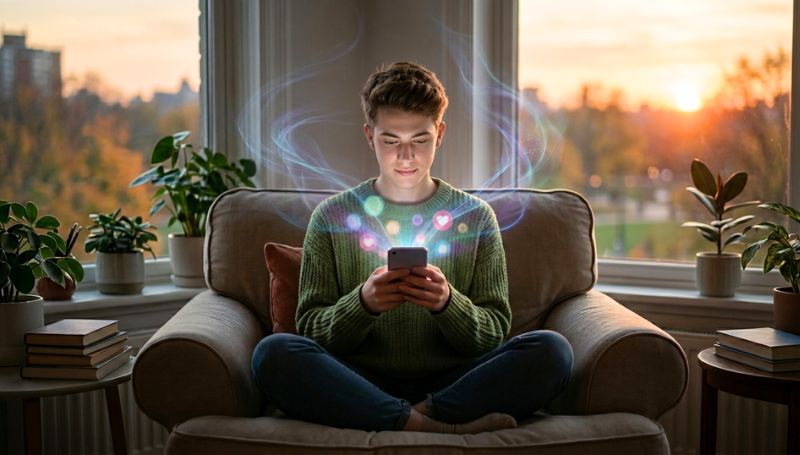
How social media affects your brain (and how to fix it)
(Global Heart) While social media helps us stay connected, it also has a profound impact on our neurological and emotional well-being. By understanding how these platforms influence our self-image and brain chemistry, we can make more conscious choices that support our mental health. This article explores recent scientific insights and provides practical steps to help you regain control over your digital life.
How social media is quietly changing the way you think
We’ve all been there: you open an app for “just five minutes” and suddenly an hour has vanished. While scrolling through TikTok or Instagram might feel like harmless relaxation, there is a lot happening under the hood of your brain. Every like, comment, and share is a piece of social data that your mind has to process—often without the helpful context of real-life interaction.
For many of us, this digital world can start to distort how we see ourselves. If you are already struggling with things like anxiety, low self-esteem, or more complex mental health issues, the impact can be even deeper. But don’t worry—understanding the “why” is the first step toward taking back your remote control.
The illusion of perfection
Social media is essentially a curated gallery. We post our best angles, our funniest thoughts, and our most exciting moments. This creates a “digital twin” that looks perfect but isn’t quite real.
The problem starts when we begin to compare our messy, everyday lives to everyone else’s highlight reels. Research published in BMC Psychiatry suggests that for people dealing with body image issues or narcissism, this can create a dangerous feedback loop. You post for validation, feel a temporary “high” from the likes, and then crash when the attention fades, leading to an endless cycle of seeking external approval to feel okay.
Why the “online you” feels different
In the physical world, we rely on body language, tone of voice, and eye contact to understand one another. Online, these signals are missing. This “disembodied” way of talking can lead to:
- Increased paranoia. Feeling like people are judging you even when they aren’t.
- Confusion. Misinterpreting a short text as anger or a lack of likes as rejection.
- Disconnection. Feeling lonelier despite being “connected” to hundreds of people.
Interestingly, not everyone uses these platforms the same way. For example, people on the autism spectrum often prefer platforms like YouTube for hobbies and facts, avoiding the high-pressure social games of other apps. Meanwhile, those prone to psychosis might find that social media blurs the line between reality and fantasy.
The gap in mental health care
One surprising finding from recent studies is that many mental health professionals still don’t “count” social media activity when assessing a patient’s health. Someone might be labeled as socially isolated because they don’t leave the house, even if they are highly active in online communities.
By ignoring our digital lives, doctors might miss signs of cyberbullying or social media addiction. To fix this, experts are calling for new tools that include our online habits, ideally designed with help from the people who use them most.
Tips for better digital mental health
You don’t have to delete every app to feel better. It’s about balance and boundaries. Here are four practical ways to protect your peace:
- Track your “social hangover.” Spend a week noticing how you feel after using specific apps. If you feel drained or anxious after twenty minutes on one platform but inspired after ten minutes on another, listen to that feeling. Your mood is the best compass for which apps deserve your time.
- Master your habits with simple rules. Small changes in when and how you use your phone can make a massive difference in your stress levels:
- The two-hour rule. Try to limit your total social media time to less than two hours a day, especially during your free time. This prevents the “infinite scroll” from eating up your entire afternoon.
- Protect your mornings and nights. Avoid using social media during the first hour after you wake up and the last hour before you go to sleep. This gives your brain a chance to start and end the day without digital noise.
- Use tech to fight tech. Set timers for your apps and turn off non-essential notifications. Every “ping” is a distraction; by silencing them, you stay in control of your attention.
- Curate with care. Treat your feed like your living room. You wouldn’t invite someone who makes you feel bad about yourself into your home, so why let them into your mind? Unfollow accounts that trigger jealousy or shame, and fill your feed with things that actually make you smile or learn something new.
- Prioritise the “real” world. A digital “like” is a snack, but a face-to-face conversation is a meal. Try to set a “digital sunset” at 9 p.m. to help your brain wind down. Make it a point to call a friend or meet for a coffee instead of just sending emojis. These physical connections help ground you in reality.
The bottom line
Social media is a tool, not a master. While it can worsen symptoms of depression or anxiety if left unchecked, you have the power to change how you interact with it. By setting boundaries and being mindful of your triggers, you can make sure your digital life supports your mental health instead of draining it.
Every scroll is a choice—make sure you’re choosing yourself.
Source: Global Heart
You may also like: