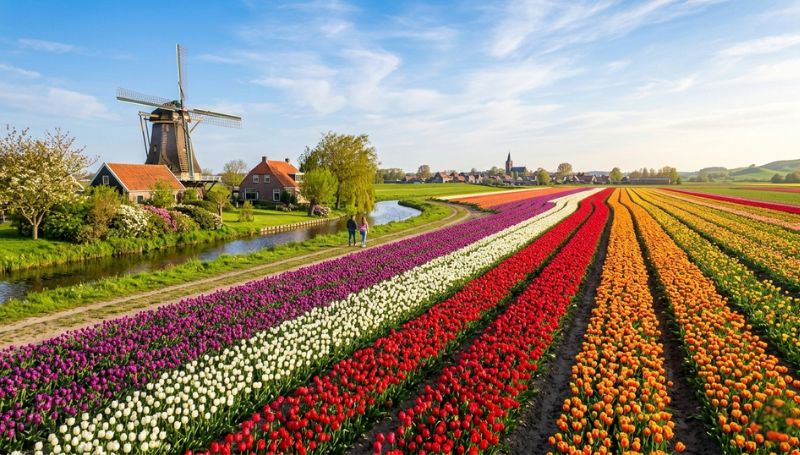
The magic and history of tulips
(Global Heart) Spring is officially in the air! Between the festivals of Ostara and Beltane, our gardens undergo a vibrant transformation, and the tulip is often the first to lead the charge. While we usually see them as a sign of prosperity, these flowers are actually versatile tools for anyone looking to add a bit of intention and “magic” to their daily life.
The origins of the tulip: From Central Asia to the Ottoman Empire
The tulip’s journey is truly epic. Long before they reached the Dutch polders, wild tulips bloomed in the high, rugged mountains of Central Asia, specifically the Pamir range in Tajikistan, as well as the Altai and Tian Shan regions.
In the 16th century, these exotic beauties began traveling west. A key figure was Ogier Ghiselin de Busbecq, an ambassador in Vienna, who was so captivated by the wild flowers he saw that he sent bulbs to Antwerp in 1562. Because they looked a bit like the headwear worn in the Ottoman Empire, the name was derived from the Persian word tulipan, meaning turban. Even today, the tulip is a member of the lily family, and its botanical name Tulipa still echoes those Turkish roots.
Dutch tulip mania: the 17th-century bulb craze and its artistic legacy
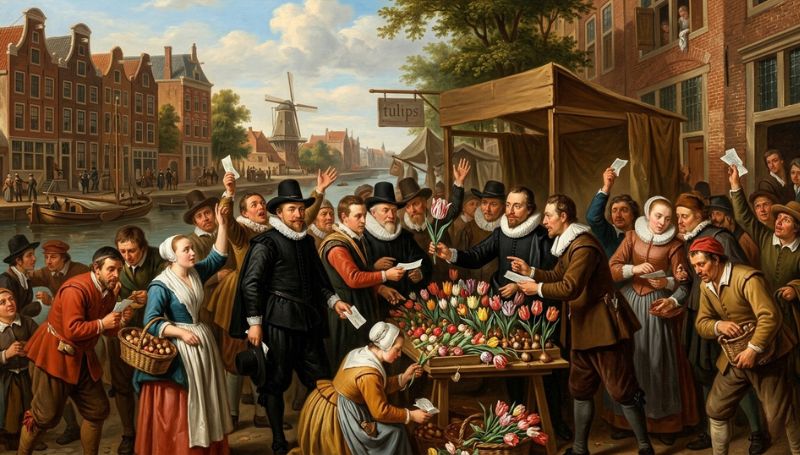
The Dutch are often seen as serious and down-to-earth, but in the 17th century, they fell into a state of collective madness known as tulip mania (or bollengekte). It all started around 1610 when the Dutch obsession with detail and trade met the exotic beauty of the tulip.
By 1636, the market went wild. A new variety called the Viceroy—famous for its red petals with two distinct bands and green leaves—became so sought after that prices hit the roof. During this “bulb craze,” people weren’t just buying bulbs with money. They were trading their homes, land, and cattle for them. At its peak, a single rare bulb like the Semper Augustus could cost as much as 6,000 guilders—an absolute fortune at the time!
Because the flowers were so expensive and their blooms so fleeting, people commissioned artists to capture them forever. Painters like Nicolaes van Veerendael immortalized these flowers in stunning still lifes. However, the bubble burst in February 1637, leaving many speculators completely penniless. Despite the crash, the tulip remained a permanent symbol of Dutch culture.
From luxury to survival: the Hunger Winter of 1944-1945
The tulip’s story in the Netherlands isn’t just one of wealth and beauty; it is also one of profound resilience. During the Hunger Winter (Hongerwinter) at the end of World War II, the occupied western part of the Netherlands suffered from a devastating food shortage.
To stay alive, many Dutch people turned to tulip bulbs as a last resort. Though dry, bitter, and low in nutritional value, these bulbs helped thousands survive the famine. Recipes were even created for tulip bulb mash or soup to make them more palatable. This somber chapter in history transformed the tulip from a mere status symbol into a lasting icon of Dutch endurance and strength.
A mindful choice: Choose sustainable tulips
While the vibrant fields of the Dutch Bollenstreek are a sight to behold, it’s worth noting that the traditional bulb industry has a history of using significant amounts of crop protection chemicals. These substances are used to fight off fungi and pests, but they can also impact local biodiversity, soil, health, and water quality. In 2026, we are seeing a major shift toward more conscious cultivation.
If you want your “magic” to be as pure as possible, look for the SKAL-certification or organic labels. Organic tulips are grown without synthetic fertilizers or harmful pesticides, making them a safe haven for bees and butterflies. Brands like JUB Holland, Bloemoloog, and Natural Bulbs are pioneers in this area, offering 100% organic bulbs and disease-resistant varieties like ‘Novi Sun’ or ‘Ad Rem’.

The legend of Shirin and Farhad: The folklore behind the flower of love
Alongside this historical timeline, a beautiful Persian legend explains the tulip’s deeper meaning. It tells the story of the star-crossed lovers Shirin, a princess, and Farhad, a humble stonemason.
When Farhad was falsely told that his beloved Shirin had died, he took his own life in despair. Upon discovering his body, Shirin followed suit. Legend says that as their blood pooled together, the very first red tulips bloomed from the earth. This is why, to this day, the tulip is a universal symbol of deep, eternal love and friendship.
Tulip color meanings: How to use floral magic in your home
Because tulips come in such a wide spectrum, they are perfect for matching specific moods or goals in your home:
- Dark purple (like the Queen of the Night): These are so deep they almost look black. They are great for rituals involving power, ambition or even “banishing” old, negative habits.
- Crisp white (like the White Prince): Perfect for a fresh start. Use these in your spring cleaning to bring a sense of purity and clarity to your living space.
- Red and orange (like the Ad Rem or Princess Irene): Red is the go-to for love and passion, while orange is all about attraction and encouragement.
- Sunny yellow (like the Strong Gold): These are often planted near doors and windowsills. In folklore, they act as guardians, protecting the home from harm.
The hidden strength of the bulb
It’s not just the petals that hold meaning; the bulb itself is a symbol of potential. Some traditions suggest keeping a tulip bulb on your altar or a central table to help expand your ability to give and receive love. It serves as a reminder that we are always surrounded by a “sea of love,” even when it’s hidden beneath the surface, waiting for the right moment to bloom.
Traditional Dutch customs: When and why to give tulips
Did you know there are specific traditions in the Netherlands regarding the gift of a tulip?
- Late February: This is the traditional time to give someone a tulip. According to tradition, the person who receives it becomes your Valentine.
- Red tulips: Give these to a partner for their birthday to celebrate your love.
- White tulips: These are given to a loved one for their birthday as a symbol of peace and new beginnings.
- Yellow tulips: Perfect for celebrating the end of the year and bringing good energy into the next.
Magical flower combinations: Pairing tulips with other flowers
You can create a “double-shot” of positive energy by mixing tulips with other spring favorites:
- Daffodils: Combine these with tulips to invite abundance and fertility into your home.
- Dandelions: Use these for positive change. Their bright yellow energy is great for drawing in good vibes.
- Forsythia: If you’re waiting for something new—like a new job or a new love—forsythia and tulips together represent hopeful anticipation.
- Violets: These are symbols of peace and protection. Adding them to a tulip bouquet can help create a tranquil, lucky atmosphere.
Interesting facts
- The average lifespan of a tulip bulb is about three years.
- The tulip was one of the very first flowers to be cultivated in Europe.
- Tulips were once used as an actual form of currency in the Netherlands.
- It is still the most popular flower in the country—and for good reason!
By choosing your tulips with intention this year, you’re doing more than just decorating—you’re tapping into a global tradition of luck, love and protection that has bloomed for over a thousand years.
Source: Global Heart
You may also like:
Edible flowers: how to find & use them in recipes
The vital role of forests: 20 reasons they are essential for life