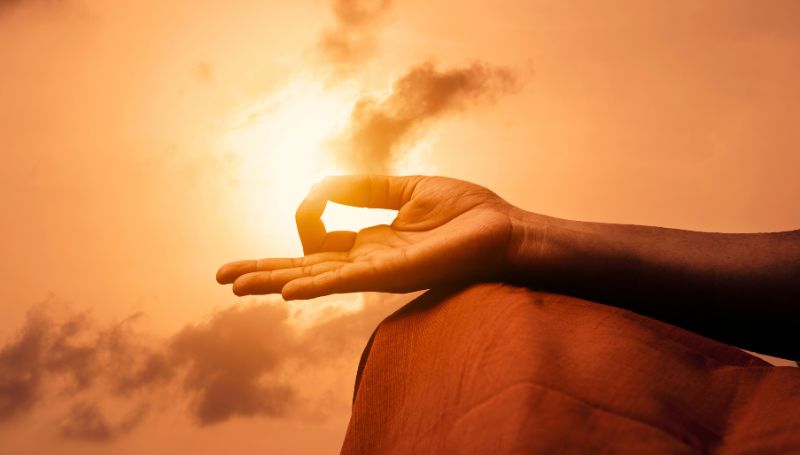
Yoga: More than just a flexible body
(Global Heart) When most people hear the word “yoga,” they immediately think of colourful mats, leggings, and impressive poses like the headstand. But if we dive into the history of this ancient practice, we’d discover that the physical exercises are just the tip of the iceberg. Yoga is actually an ancient “technology” for the mind and spirit, designed to bring us back to our true selves.
The fundamentals of Yoga: A dive into the eight limbs
The word “Yoga” itself comes from the Sanskrit word yuj, which means to join or unite. Essentially, it’s about creating a connection between our individual selves and a larger “universal spirit” or cosmic consciousness.
Yoga philosophy and the golden age of Yoga
Yoga didn’t just appear overnight. It is believed to have evolved during the sat yuga, often referred to as the Golden Age. While it was practiced for millennia, the physical evidence of its origins only truly surfaced with the discovery of the Indus-valley civilisation. Archeologists found seals depicting figures in yoga-like positions, proving that these techniques have been part of human culture for a very long time.
The ancient roots and modern practice of Patanjali’s Yoga
The most famous “manual” for yoga was written by the Indian sage Patanjali. His Yoga sutras are still the gold standard for practitioners today. Interestingly, Patanjali doesn’t define yoga as a way to get fit; he defines it as yoga chitta vritti nirodha—the cessation of the fluctuations of the mind. In plain English: yoga is the art of making your mind go quiet.
Before we even get to the physical poses, yoga asks us to look at how we live. Today, yoga is often seen as a form of calisthenics, but historically it was a complete lifestyle. The first two “limbs” of yoga, the yamas and niyamas, are the foundation. If your life is chaotic because of dishonesty or greed, no amount of breathing exercises will make your mind still.
The yamas are five social ethics (how you relate to the world)
- Ahimsa (non-violence): Practicing kindness toward others and yourself.
- Satya (truthfulness): Being honest and living your truth.
- Asteya (non-stealing): Not taking things, time, or credit that isn’t yours.
- Brahmacharya (right use of energy): Focusing your energy on what truly matters.
- Aparigraha (non-greed): Letting go of the need to hoard or over-consume.
The niyamas are five personal observances (how you relate to yourself)
- Saucha (cleanliness): Keeping both your body and your thoughts clear.
- Santosha (contentment): Being happy with what you have right now.
- Tapas (self-discipline): The “heat” or grit needed to stay committed to your goals.
- Svadhyaya (self-study): Reflecting on your own patterns and soul.
- Ishvara pranidhana (surrender): Trusting the process of life instead of needing control.
Eight steps to stillness
Patanjali outlined eight stages in total, known as ashtanga yoga (meaning “eight-limbed yoga”). While many people today use the word “Ashtanga” for a vigorous style of exercise, it originally referred to these steps:
- Yama: Moral restraints.
- Niyama: Spiritual practices.
- Asana: Finding a steady, comfortable seat with an erect spine.
- Pranayama: Mastering the breath to control your energy.
- Pratyahara: Drawing your attention inward, away from distractions.
- Dharana: Deep concentration.
- Dhyana: Moving into a flow of meditation.
- Samadhi: Reaching a state of complete bliss and absorption.
Looking at this list, it’s clear that the “stretching” part (asana) is only step three!
Finding the path that fits you
Because everyone is different, yoga isn’t a “one size fits all” deal. We all have different temperaments, which has given rise to four broad classifications of yoga:
- Karma yoga: Where we utilise the body through action and service.
- Jnana yoga: Where we utilise the mind through knowledge and study.
- Bhakti yoga: Where we utilise the emotion through devotion.
- Kriya yoga: Where we utilise the energy through specific techniques.
Most people are a unique mix of these four aspects. While you can learn a lot from books, ancient tradition suggests that a guru (a teacher) is essential to help you find the right balance for your specific personality.
Whether you’re looking for stress relief or a deep spiritual journey, yoga offers a complete toolkit for living a more balanced, conscious life. It’s not just about how far you can bend; it’s about how much you can open up.
Key takeaways: What to remember
- Yoga = union: It is the practice of uniting the individual self with universal consciousness.
- The goal is stillness: According to Patanjali, yoga is about quieting the “fluctuations of the mind,” not just physical fitness.
- More than poses: The physical aspect (Asana) is only one of the eight “limbs” or stages of yoga.
- Ethical foundation: Success in yoga starts with the Yamas (social ethics) and Niyamas (personal habits).
- Four paths: Depending on your personality, you can focus on the body (Karma), mind (Jnana), emotions (Bhakti), or energy (Kriya).
Frequently asked questions (FAQ)
Is yoga a religion? While yoga has its roots in ancient Indian philosophy and Hinduism, it is practiced today as a universal system for health and mental well-being that can complement any belief system.
Do I have to be flexible to start yoga? Not at all! Saying you’re too stiff for yoga is like saying you’re too dirty to take a bath. Flexibility is a result of the practice, not a requirement.
What is the most important limb of yoga? While modern classes focus on Asana, traditionalists believe the Yamas and Niyamas are the most important because they provide the mental and ethical stability needed for the higher stages of meditation.
Source: Global Heart
Je kunt ook interesse hebben in: