Gaia: The heartbeat of our planet
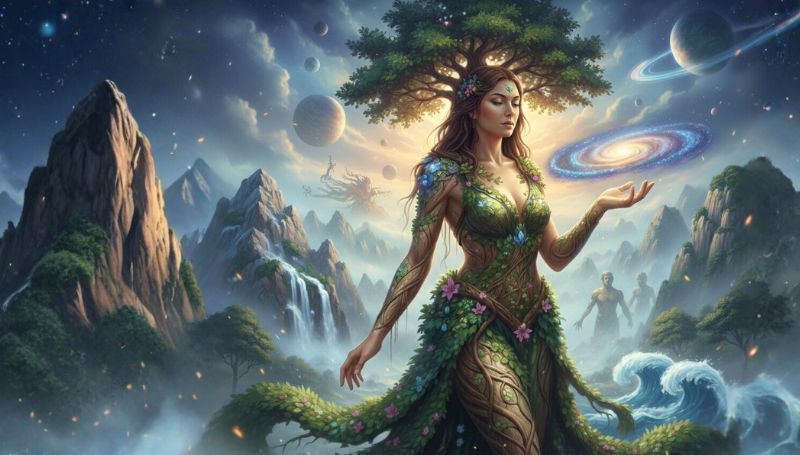
(Global Heart) Have you ever stood in a dense forest or gazed over a vast mountain range and felt like the earth was actually alive? You tuned into an ancient energy that the Greeks called Gaia. Long before she was a name for space telescopes or environmental movements, Gaia was the ultimate mother—the primordial goddess who literally became the ground we walk on.
The mother of all things
Today, Gaia has evolved from a figure in dusty textbooks into a powerful symbol for the modern green movement. She isn’t just a story; she’s a reminder of our deep, unbreakable connection to nature. Quite simply, the definition of Gaia is “life”.
Who is Gaia in greek mythology?
Although the name Gaia has various meanings and interpretations, it is most commonly associated with the Greek goddess who personified Earth in its primordial form. Quite simply, the definition of Gaia is life. She is the mother goddess, inhabiting the planet and offering nourishment to all her children. Across ancient civilizations, she was revered as the nurturer and architect of existence, known by many names: Gaea, Mother Earth, Terra Mater to the Romans, and more recently, Mother Nature.
Gaia, often pronounced “GUY-uh,” holds the essence of existence within its syllables. Steeped in the rich tapestry of Greek mythology, her name serves as a bridge to the spirit of our planet. The etymology—Γαῖα in original Greek—translates directly to ‘earth’ or ‘land.’ Today, the term has transcended myth, becoming a universal symbol for the interconnectedness of all life, especially within modern ecological contexts.
The mother of life and the divine heavens
Within the ancient pantheon, Gaia’s presence was unparalleled. She was the one who gave structure to the formless void of Chaos. From her fertile womb sprung the very fabric of the cosmos:
- Uranus (the Sky): Her firstborn, equal, and husband.
- Pontus (the Sea): The ancient, unfathomable waters.
- Ourea (the Mountains): The physical heights of the world.
- The Titans: Including Cronus and Oceanus, who would shape the world’s destiny.
- The Monsters: The Cyclopes and the hundred-handed Hecatoncheires, representing the raw, untamed forces of nature.
A mother with a mission
Gaia was never a passive observer. When Uranus began to loathe his own children and imprisoned them in the dark depths of the underworld (Tartarus), Gaia took action. She crafted a flint sickle and convinced her son, Cronus, to overthrow his father. This act demonstrated that Gaia is a fierce protector of life, opposing cruelty.
She was also a force to be reckoned with when the natural balance was threatened. During the Gigantomachy, she created the giants to challenge the Olympian gods and restore equilibrium. Later, as a last resort, she gave birth to Typhon, a terrifying monster with a hundred fire-breathing heads. While Zeus eventually won that battle, the myth highlights the earth’s raw, destructive power when the natural order is at stake.
Powers and sacred symbols
Gaia is much more than just fertile soil. She possesses vast elemental powers and was the original source of prophecy. Long before Apollo took over the Oracle at Delphi, the site was sacred to Gaia. Gods and mortals alike sought her out for her ancient wisdom. To recognize her presence, look for these symbols:
- Fruit and grain: Representing the abundance and agriculture that sustains us.
- Serpents: In mythology, these symbolize regeneration, healing, and the protection of the earth.
- The oak tree: Sacred to Gaia, these trees represent the strength and stability of the natural world.
The paleolithic Venus: Rediscovering the Earth mother
Long before the written myths of Greece, ancient humans honored the feminine Earth Mother through Venus figurines. These small, robust sculptures found across Europe symbolize fertility and the generative powers of nature. Modern excavations suggest that the Earth Mother was at the core of human belief for millennia, serving as the ultimate source of sustenance. By studying these artifacts, we aren’t just looking at art; we are reconstructing a lost narrative where the Earth was seen as a sacred, living provider.
A return to the divine feminine: Gaia’s modern resurgence
For centuries, patriarchal history pushed Gaia and other powerful female figures to the sidelines. However, the 1970s marked a turning point. The convergence of feminism and environmentalism revitalized Gaia’s image.
In the wake of Rachel Carson’s Silent Spring, Gaia became an emblem of ecological awareness. This modern embrace has galvanized a collective push for sustainability, proving that the “divine feminine” isn’t just an abstract concept—it’s a call to action for a balanced, thriving planet.

Ancient roots and modern science
In the 1970s, ancient wisdom met modern science through the Gaia hypothesis, introduced by chemist James Lovelock and biologist Lynn Margulis. They proposed that Earth isn’t just a rock with life on it, but a self-regulating, living organism. This idea changed everything. It shifted our perspective from “the planet is a resource for us to use” to “we are a small part of a living system.”
- Homeostasis: Much like a human body maintains its temperature, earth adjusts its atmosphere and oceans to keep conditions perfect for life.
- Cooperation: Life doesn’t just “exist” on earth; it actively shapes the environment. For example, plants produce the very oxygen we need to breathe.
Why Gaia matters right now
It turns out the legendary tales of Gaia’s children actually mirror scientific principles. The Titans represent the grand, steady cycles like currents and solar energy, while the “monstrous” children like the Cyclopes represent the raw, volatile energy—thunder and earthquakes—that the earth needs to reshape itself.
This perspective shifted our role from “owners” of the planet to “caretakers” of a living system.
What Gaia symbolizes today
- The green movement: She is the face of ecology and environmental consciousness.
- Feminine power: As an independent creator, she represents fertility and strength.
- Renewal: Just as the seasons change, Gaia reminds us that life always finds a way to bounce back.
The spiritual meaning of Gaia in practice
Beyond the science and the stories, Gaia represents an all-loving, intelligent cosmic force. Whether you call her Gaea, Terra Mater, or Mother Nature, her legacy reminds us that we are part of an intricate web. Engaging with her legacy requires more than just an annual Earth Day celebration. It calls for a daily commitment to the stewardship of the Earth.
To live in harmony with Gaia means
To live in harmony with Gaia means making conscious choices, recognizing how our consumption affects the global web of life. It means active advocacy for natural habitats and a deep reverence for the natural world. You can adopt a “systems-thinking” approach to your life by treating the planet like a living body:
- Respect the “skin” (soil health): Start composting. Returning nutrients to the ground mimics Gaia’s cycle of renewal and rebirth.
- Protect the “lungs” (air quality): Support reforestation or plant native species. These plants are “tuned” to your local ecosystem’s feedback loops.
- Honor the “blood” (water conservation): Use biodegradable products. In a self-regulating system, everything you put down the drain eventually returns to the cycle.
- Minimize “interference” (energy use): Reducing your carbon footprint gives the planet’s natural cooling systems a chance to keep up with homeostasis.
By adopting sustainable practices, we don’t just “save the planet”—we pay homage to the enduring spirit of Gaia and embrace our role as the dedicated caretakers of our beautiful, dynamic home.
Source: Global Heart
You may also like: